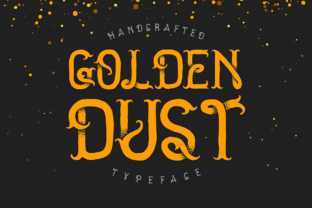
Golden Dust: A Hand-Crafted Font with Unmatched Detail
Typography is often the silent storyteller of design. It sets the mood, guides the reader, and carries the personality of a brand or project without making a sound. Among the many typefaces available today, Golden Dust stands apart. This is not a mass-produced, mechanically uniform font. It is a meticulously hand-created typeface, shaped with the kind of detail that only comes from careful, deliberate craftsmanship. Every letterform carries subtle variations, organic curves, and a warmth that digital-only fonts often lack. Whether you are designing a wedding invitation, building a brand identity, or simply exploring typography as a hobby, understanding what Golden Dust offers can change how you approach your next project.
What Makes Golden Dust Different
At its core, Golden Dust is a handcrafted font—each character drawn, refined, and digitized with an attention to nuance that machine-generated fonts rarely replicate. The result is a typeface that feels alive. Stroke widths vary naturally. Serifs and flourishes carry a human touch. Letters interact with one another in ways that feel intentional, not accidental.
This level of detail does more than look beautiful. It adds depth and authenticity to any design. In a world where audiences are bombarded with generic visuals, a font like Golden Dust helps you stand out by being unmistakably human. The slight imperfections become its strength, lending an air of elegance, nostalgia, or handcrafted luxury depending on how you use it.
For Graphic Designers and Creative Professionals
If you work in design, you know that the right typeface can make or break a composition. Golden Dust offers a distinctive voice that works beautifully for logotypes, packaging, editorial layouts, and branding projects where you need a refined, hand-drawn feel. Its detailed letterforms allow you to create headlines that feel bespoke without spending hours drawing custom lettering from scratch.
For a logo redesign for a boutique tea company, for example, Golden Dust can convey both tradition and artisanal quality. The slight irregularity in the strokes signals handcraft, while the overall structure remains legible and professional. You can also pair it with simpler sans-serif fonts for body text, letting the handcrafted elements shine where they matter most.
For Small Business Owners and Entrepreneurs
As a business owner, your brand identity must communicate trust, personality, and value—often on a limited budget. Golden Dust gives you access to a high-end, handcrafted aesthetic without needing to commission a custom typeface. You can use it on your website headers, product packaging, social media graphics, and printed materials to create a cohesive, polished look.
Consider a small candle maker selling at local markets and online. Using Golden Dust for product labels and promotional banners instantly elevates the perception of quality. Customers associate handcrafted typography with attention to detail and premium ingredients. The font becomes a subtle but powerful part of your brand story.
For Hobbyists and Creative Beginners
If you are new to design or typography, Golden Dust is a forgiving and inspiring tool. Because the font already carries so much character, you do not need advanced skills to create professional-looking results. A simple quote graphic, a greeting card, or a personal blog header can look polished and intentional with Golden Dust as the centerpiece.
Beginners often worry about choosing fonts that look amateurish. Golden Dust avoids that pitfall. Its detailed construction provides a built-in level of sophistication. You can experiment with sizing, spacing, and color combinations while relying on the typeface to carry the visual weight. This makes it both a learning asset and a creative confidence booster.
For Educators and Publishers
Teachers, workshop leaders, and publishers can use Golden Dust to create materials that feel inviting and human. Handcrafted fonts are excellent for worksheets, activity books, and classroom posters where you want to spark creativity or convey warmth. The detailed letterforms can also serve as examples in typography lessons, helping students see the difference between mechanical and organic design.
For a self-published poetry book, Golden Dust used sparingly for chapter titles or section breaks can add a layer of intimacy that complements the written word. It respects the content without overwhelming it, making the reading experience more tactile and memorable.
Evaluating Golden Dust: What Matters Most to You
Different priorities will shape how you evaluate this font. Here is a breakdown of what to consider based on your specific needs.
Quality and Detail
The defining strength of Golden Dust is its handcrafted quality. If your project demands a personal, artisanal touch, this font delivers. The detail is visible at larger sizes, so it excels in display use—headlines, titles, logos, and short passages. For extended body text, its ornate nature may reduce readability, so it is best reserved for accent roles.
Ease of Use
Despite its complexity, Golden Dust is straightforward to install and use in standard design software. It comes as a standard font file (OTF or TTF) and works with programs like Adobe Creative Suite, Canva, Affinity, and even word processors. You do not need special skills to start using it. However, understanding basic typography principles—like kerning, tracking, and leading—will help you get the most out of its detailed forms.
Cost and Commercial Value
Handcrafted fonts often command higher prices than mass-produced alternatives, but they also offer greater uniqueness. Golden Dust sits in a value range that is accessible to independent creators and small businesses. If you are a freelancer, one font license can pay for itself after a single client project, especially when the result helps you win repeat business. For consumers using it in personal projects, the cost is often justified by the emotional impact of the finished product.
Flexibility Across Projects
Golden Dust is not a one-size-fits-all typeface. It thrives in specific contexts: elegant, vintage, rustic, or artistic themes. If your brand voice leans modern, minimal, or corporate, you may want to use it sparingly—perhaps for a single logo element or a decorative initial cap. Its flexibility comes from knowing where to place it and where to let simpler fonts take over.
Practical Examples for Different Reader Types
- A wedding planner creating save-the-date cards can use Golden Dust for the couple’s names and the event date, pairing it with a clean sans-serif for logistical details. The handcrafted feel mirrors the personal nature of the celebration.
- A food blogger designing a recipe ebook can use Golden Dust for chapter titles and recipe names. It adds a homemade, approachable quality that aligns with the content’s warmth.
- A freelancer building a portfolio website can use Golden Dust in the hero section or for service headings. It signals creativity and attention to detail—traits clients seek in a hire.
- A small business owner rebranding a handmade soap line can apply Golden Dust to product labels, offering a consistent, artisanal look across the entire product range.
Reliability and Long-Term Use
Handcrafted fonts tend to age well visually because they do not chase trends. Golden Dust carries a timeless quality that will feel relevant for years, especially in projects where authenticity is prized. It works across both digital and print media, though you should test its legibility on screens at smaller sizes. For long-form digital reading, reserve Golden Dust for headlines and accent text.
How to Know If Golden Dust Matches Your Goals
Before committing to a font, ask yourself a few questions. What is the primary emotion or message you want to convey? If the answer includes words like handcrafted, elegant, nostalgic, artisanal, or premium, Golden Dust is a strong candidate. If your project requires strict readability at very small sizes or a highly neutral, corporate tone, you may want to use it only for accent elements or choose a simpler companion font for body copy.
Your skill level also plays a role. Beginners will appreciate how much visual lift the font provides on its own. Experienced designers can push further by manipulating kerning, layering effects, or combining Golden Dust with other typefaces to create contrast. Regardless of where you start, the font rewards thoughtful use.
Making Golden Dust Work for You
No single typeface fits every scenario, and Golden Dust is no exception. But when you align its strengths with your specific project goals, the results can be striking. The key is to use it with intention—let its handcrafted detail lead the visual narrative where it belongs, and step back with simpler typography elsewhere.
For creators, entrepreneurs, educators, and hobbyists alike, Golden Dust offers something rare in the digital age: a font that feels like it was made by hand, for people who care about the details. Whether you are launching a brand, designing a keepsake, or building a creative skill, this typeface can add warmth, depth, and personality to your work. Take the time to experiment with it, test it in your own projects, and see how a careful touch of Golden Dust transforms what you create.